The Enterprise seat fee is $20 per month on annual billing, the same as a Team Standard seat. But that fee buys access, not usage: every token is metered separately at standard API rates. That is the entire story of the 2026 billing change, and it means the old rule of thumb (big companies buy Enterprise, everyone else buys Team) now produces wrong answers.
The billing model changed: hybrid versus pure metering
Team is a hybrid. Two seat types coexist on one plan: Standard ($25/month, $20 annual) and Premium ($125/month, $100 annual, roughly five times Standard's included usage). The seat includes an allowance; only usage past it bills as usage credits at API rates. A seat is a flat line: pay fixed, work up to the cap.
Enterprise is pure metering. The $20 seat fee (annual) buys the right to use the platform, and everything from the first token bills at standard API rates. There is no included allowance. On the self-serve path you prepay credits, and when the balance hits zero the entire organization stops, not just one user.
The two shapes decide the bill: Team's invoice is "seats plus possible overage," Enterprise's is "seats plus all usage." Which is cheaper for the same team depends entirely on the usage itself.
Two filters before any math
Filter one: is an Enterprise-only control mandatory. SCIM provisioning, admin audit logs, the Compliance API (programmatic reads of conversations, feeding SIEM and DLP), custom data retention, IP allowlisting, customer-managed encryption keys, US-only inference, and a HIPAA-ready configuration are Enterprise-only. If legal wrote a retention period into policy or your security review requires audit logs, the decision is already made.
Filter two: seat floors and ceilings. Team tops out at 150 seats. Enterprise starts at 20 self-serve and 50 through sales. A five-person company cannot buy Enterprise; a 200-person company cannot stay on Team. Only the middle has a real choice.
One stale assumption to drop: SSO is included in Team now. "We need SSO, so Enterprise" was a 2025 argument and no longer holds.
The break-even: $80 per person per month
On annual list prices with identical usage U (that person's metered monthly spend):
- Enterprise = $20 + U
- Team Premium = $100 + overage (zero inside the allowance)
- Team Standard = $20 + overage
Against Premium: $20 + U = $100 puts break-even at U = $80/month. Anyone consuming more than $80 of metered usage is cheaper on a Premium seat; below that, Enterprise metering wins.
Against Standard there is no break-even at all. The seat fee is the same $20 and Standard includes an allowance on top, so Enterprise structurally cannot undercut Standard on direct cost. Enterprise is never the cheaper option; it is the option you buy for controls, or to remove per-seat usage caps.
What does $80 look like? At Sonnet 5 list rates (5:1 input-to-output, no caching) it is roughly 24 million tokens a month. Heavy Claude Code use with 80% of prompt tokens served from cache pushes that toward 37.5 million. The spread is exactly why back-of-envelope math fails.
Measure your own usage, not the rate card
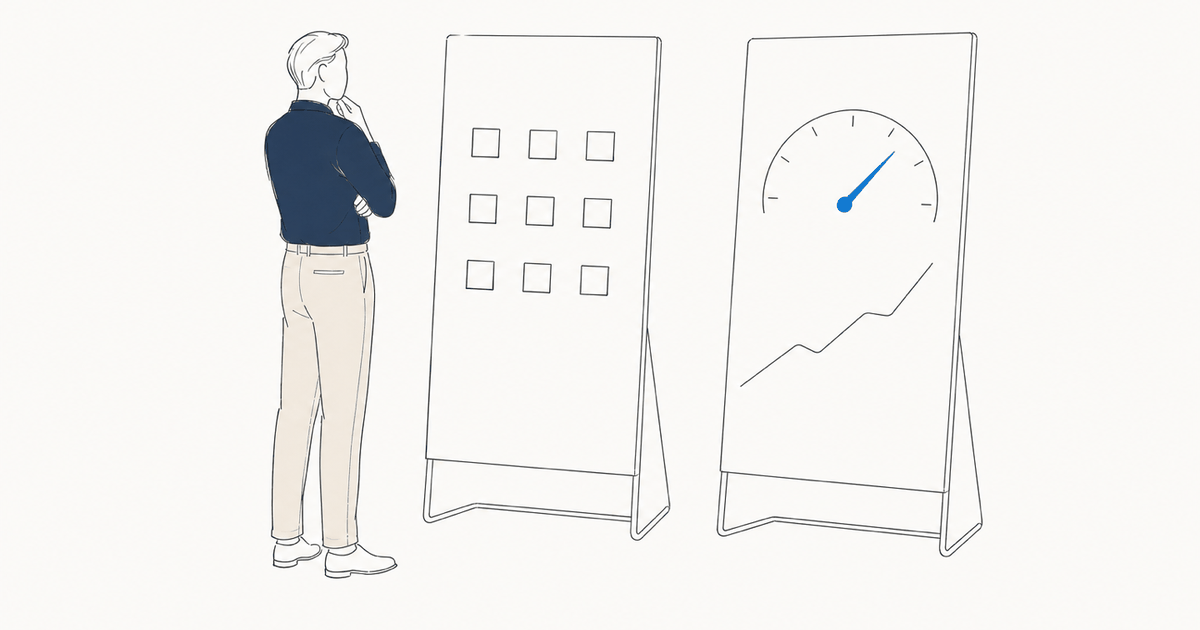
You cannot compute U from public docs, but you can measure it. Claude Code exports OpenTelemetry data with per-user, per-model token counts and a cost estimate at standard API rates, which is the same arithmetic Enterprise metering uses. The method:
- Pull 4–8 weeks of telemetry; the first weeks after rollout are not representative.
- Convert to per-user monthly cost; take the median, P90 and max, not the average, because usage concentrates in a few heavy users.
- Count how many people sit above $80/month. That head count is your Premium-seat shortlist; nobody else needs one.
- Compare "n Standard + m Premium + expected overage" against "$20 × seats + total U". From there it is addition.
For Chat and Cowork usage, the analytics spend-report CSV carries a product column; use it to fill in the other half.
Three contract gotchas
Self-serve Enterprise is prepaid. A zero balance halts the whole org, so design spend limits around "where do we want work to stop," not just "how much can we spend." Sales-assisted contracts bill monthly in arrears and do not stop this way.
Team annual seats do not shrink. Adding a seat mid-term is prorated and charged immediately; removing one refunds nothing. Buy annual for the headcount you already have, not the hiring plan.
Legacy contracts are a different animal. The seat-based Enterprise variants are closed to new contracts and convert at renewal. Everything above describes 2026 new contracts only; do not map the numbers onto an existing one.
Sources: Aimeterly and SSD Nodes 2026 plan comparisons (verified against Anthropic's pricing pages through Sept 11); Anthropic pricing and help center. Confirm prices before signing.